Weather Alert in Nebraska
Red Flag Warning issued March 25 at 2:57PM CDT until March 26 at 11:00AM CDT by NWS North Platte NE
AREAS AFFECTED: Eastern Panhandle/Crescent Lake NWR; Sandhills/Valentine NWR/Nebraska National Forest; Niobrara Valley/Fort Niobrara NWR/Samuel R McKelvie National Forest; Loup Rivers Basin; Frenchman Basin; Loess Plains
DESCRIPTION: ...CRITICAL FIRE WEATHER CONDITIONS CONTINUE INTO THURSDAY MORNING... * AFFECTED AREA...Fire Weather Zone 204 Eastern Panhandle/Crescent Lake NWR, Fire Weather Zone 206 Sandhills/Valentine NWR/Nebraska National Forest, Fire Weather Zone 208 Niobrara Valley/Fort Niobrara NWR/Samuel R McKelvie National Forest, Fire Weather Zone 209 Loup Rivers Basin, Fire Weather Zone 210 Frenchman Basin and Fire Weather Zone 219 Loess Plains. * TIMING...Through 11 AM CDT Thursday. * WINDS...West-northwest 15 to 25 mph with gusts up to 35 mph through this evening. A cold front tomorrow morning brings an abrupt wind shift, as winds become northerly at 20 to 25 mph gusting 30 to 40 mph. * RELATIVE HUMIDITY...As low as 10 to 20 percent. Poor humidity recovery to 50 to 55 percent overnight. * TEMPERATURES...In the Upper 80s to low 90s. * LIGHTNING...Isolated dry lightning is possible after sunset this evening across portions of western Nebraska and the Sandhills. While the threat is low, a few showers may be robust enough to create sporadic lightning strikes and gusty, erratic winds. * IMPACTS...Any fire starts may spread rapidly and be difficult to control.
INSTRUCTION: A Red Flag Warning means that critical fire weather conditions are either occurring now, or will shortly. A combination of strong winds, low relative humidity, and warm temperatures can contribute to extreme fire behavior.
Want more detail? Get the Complete 7 Day and Night Detailed Forecast!
Current U.S. National Radar--Current
The Current National Weather Radar is shown below with a UTC Time (subtract 5 hours from UTC to get Eastern Time).

National Weather Forecast--Current
The Current National Weather Forecast and National Weather Map are shown below.

National Weather Forecast for Tomorrow
Tomorrow National Weather Forecast and Tomorrow National Weather Map are show below.

North America Water Vapor (Moisture)
This map shows recent moisture content over North America. Bright and colored areas show high moisture (ie, clouds); brown indicates very little moisture present; black indicates no moisture.

Weather Topic: What is Evaporation?
Home - Education - Precipitation - Evaporation
 Next Topic: Fog
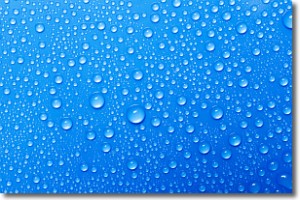
Evaporation is the process which returns water from the earth
back to the atmosphere, and is another crucial process in the water cycle.
Evaporation is the transformation of liquid into gas, and it happens because
molecules are excited by the application of energy and turn into vapor.
In order for water to evaporate it has to be on the surface of a body of water.
Next Topic: Fog
Weather Topic: What are Fractus Clouds?
Home - Education - Cloud Types - Fractus Clouds
 Next Topic: Freezing Rain
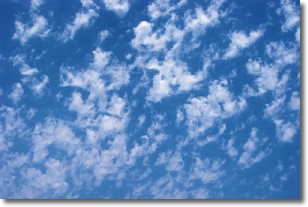
A fractus cloud (scud) is a fragmented, tattered cloud which has
likely been sheared off of another cloud. They are accessory clouds, meaning they
develop from parent clouds, and are named in a way which describes the original
cloud which contained them.
Fractus clouds which have originated from cumulus clouds are referred to as
cumulus fractus, while fractus clouds which have originated from stratus clouds
are referred to as stratus fractus. Under certain conditions a fractus cloud might
merge with another cloud, or develop into a cumulus cloud, but usually a
fractus cloud seen by itself will dissipate rapidly.
They are often observed on the leading and trailing edges of storm clouds,
and are a display of wind activity.
Next Topic: Freezing Rain
Current conditions powered by WeatherAPI.com